

Borough Behind The Scenes: Lauren Flett on her role with the Wilderness Boys and female representation in the men’s game
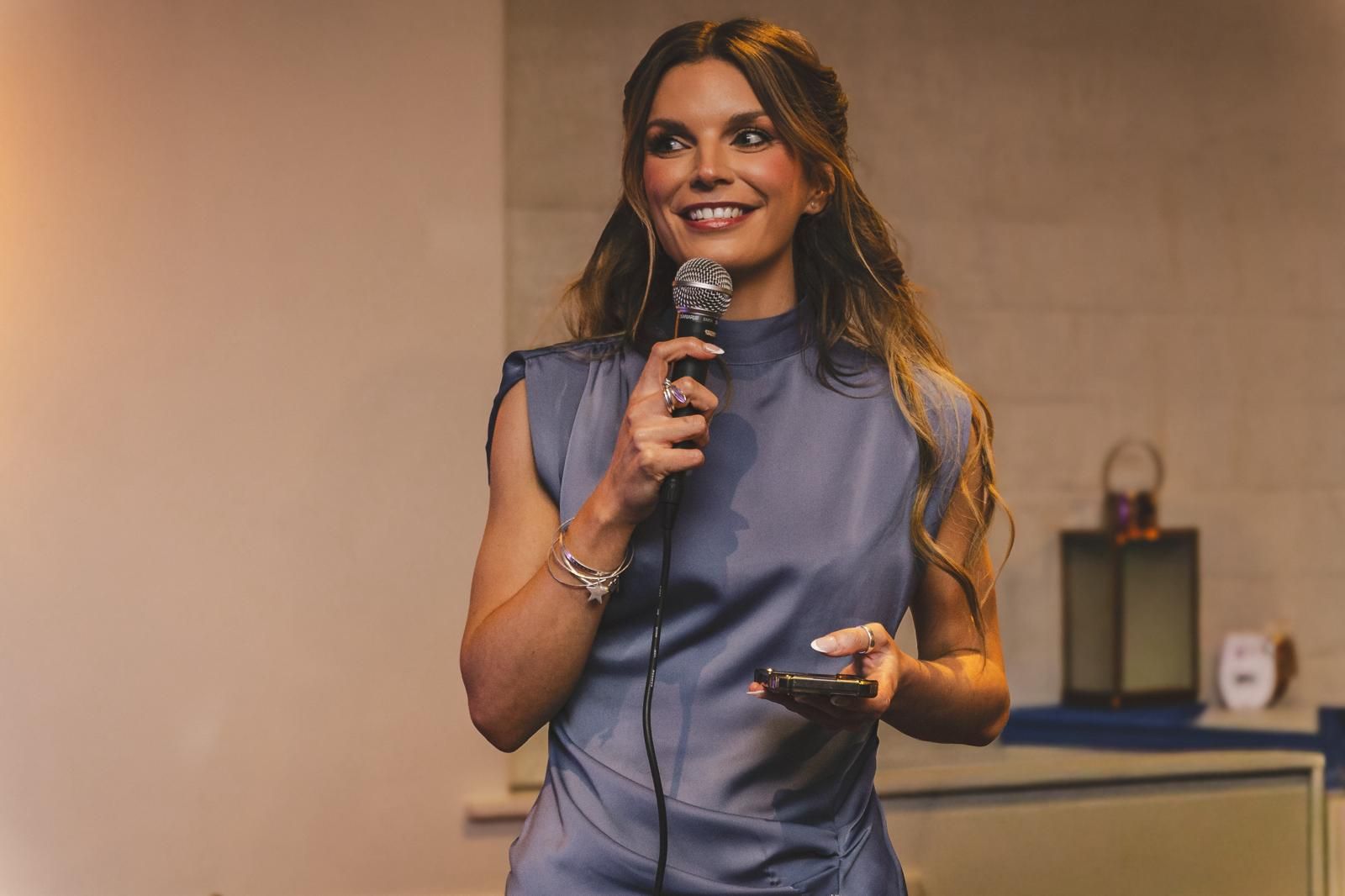
A feature length interview with Club Director Lauren Flett
Borough Behind The Scenes: Lauren Flett on her role with the Wilderness Boys and female representation in the men’s game
As is the case at all football clubs throughout the land, what happens on the pitch at the Technica Home of Grimsby Borough naturally dominates the headlines and social media channels. Though in reality, that is just the tip of the iceberg, with a vast amount of unseen work undertaken in the background by a wholly committed group of multi-skilled personnel that allows what we see on a Saturday afternoon or midweek evening to come to fruition. Throughout the season, we'll be shining a light on those whose tireless efforts make the Football Club what it is, while discussing more widespread topical factors within the game along the way.
In the first of our ‘Borough Behind the Scenes’ series, we catch up with Director Lauren Flett to find out more about her time with the Wilderness Boys, what goes into running a non-league club in the modern era, and hear her thoughts on current female representation at leadership levels within the men's game.
Lauren is now in her third season working for Borough, and, as she describes, her input and influence has evolved significantly over that time:
“I initially joined as Hospitality Manager and, last season, was asked to join the Board of Directors. Since then, my role has developed quite a lot and now covers much more of the wider operations of the club.
There is a lot that goes into running a club at this level that people understandably don’t see on a matchday. My involvement can range from hospitality and events to general organisation, planning and helping with the day-to-day challenges that naturally come with running a football club.
Since I’ve been involved, we’ve also transitioned into a limited company, which has brought additional responsibilities and has been another important step in the club’s development.
I think my role will continue to evolve as the club does, which is one of the things I really enjoy about it. There is always something new to work on or something we can improve.”
It was through her full-time employment that Lauren became involved initially, and she went on to tell us how she feels that the combination of her roles within football and her personal life are mutually beneficial in many ways:
“It all started through my job at Fastnet Fish, who sponsored Borough. I went along to a hospitality day with the company and the rest is history!
I definitely didn’t expect that a few years later I’d be sitting on the Board of the Football Club, but once I became involved, I became really invested in Borough and wanted to do more.
Being asked by Jase (Club Chairman, Jason Flint) to join the board last season meant a lot because it felt like recognition of the work I’d already put into the club and that he believed I could contribute at that level.
I’m also very conscious that there are people around our board table with far more business and life experience than I have. Everyone brings something different, and I learn a huge amount from the other directors.
For me, that makes the opportunity even more valuable. One of my ambitions is to one day progress to director level in my professional career, so being exposed to board-level discussions, decision-making and different leadership styles at this stage of my career is great experience.”
Anyone who has been involved in football, particularly at non-league levels, will appreciate the sacrifices people have to make in order to operate a successful club consistently, while at the same time maintaining a balance within their personal life. Lauren commented on that, and also what her position as Director entails on a regular basis:
“It can sometimes feel like having two full-time jobs!
My friends and family don’t always understand how I can be so busy with the football club because I think, unless you’re involved in non-league football, it’s difficult to appreciate how much happens away from a Saturday afternoon.
There is always something to do. If it isn’t an immediate operational job, you’re thinking about what we can do next, how we can improve something or how we can make the club bigger and better. It doesn’t really stop.
And Borough is much bigger than just the first team. We have our Under-17s, Under-18s, Reserves and junior section, as well as a similar structure within our women’s section, so there are a lot of moving parts across the wider club.
You do give up a lot of your time, but I genuinely love it. I love the people and I love being part of Borough. When everything comes together on a Saturday, the lads are enjoying their football, hospitality is busy and there is a really good atmosphere around the club, you look around and think, ‘This is why we do it.’
That feeling makes all the hours worthwhile.”
Having discussed the crossover between her full-time job and the work she does at Borough, the past two-and-a-half years have been a valuable learning experience for Lauren:
“One of the biggest things I’ve learned personally is to have confidence in my own voice.
Football can be quite a dominant environment and, particularly when you’re sitting in a room where people have much more football experience than you, it can be intimidating to put your opinion forward.
I don’t have the tactical knowledge that some of the people around me have, and there have definitely been times when that has made me question whether I should contribute to a conversation. But I’ve learned that not knowing everything about the tactical side of football doesn’t mean you don’t understand people or what is right for the club.
I actually think being prepared to give my opinion has played a part in getting me into the position I’m in now. You can listen and respect other people’s experience without automatically assuming that your own opinion is less valuable.
At the same time, being confident in my voice doesn’t necessarily mean being the loudest voice in the room. I think one of my strengths is that I’m naturally quite empathetic and sometimes take a softer approach. I tend to think about where someone might be coming from and how they might respond to a situation or conversation. Some people respond better to that, and I think there’s real value in having different approaches around the table.
You can be empathetic and understanding without being a pushover, just as you can be strong in your opinion without having to be the most dominant person in the room.”
That empathetic, yet proactive approach is vital, especially when weighing up the financial requirements necessary to sustain a wide-ranging community club for both the medium and long-term:
“There are significant financial responsibilities involved in running a club like Borough, and becoming a limited company reflects the need to take those responsibilities seriously. You have to think beyond the immediate season and make decisions that give the club the best possible chance of being sustainable in the long-term.
That applies across Borough, not just to the first team. We want to continue developing our pathways, junior section and wider club while also being ambitious about where we can go.
Ultimately, we want success, but we want to build it on strong foundations so its more sustainable for seasons to come.”
The women’s game and its popularity has grown exponentially over the past couple of decades. However, reports in recent years (New Fair Game report links football’s failing finances to gender inequality — Fair Game) suggest that the men’s game remains behind the curve by comparison to other industries when it comes to appointing females into senior positions within their hierarchy across the board, something that may well be hurting them commercially, and in-turn financially, in the process.
Lauren’s contribution at Borough is invaluable in this regard, though she does agree that the sport as a whole has work to do on a broader level:
“I do think there is still room for improvement in terms of female representation, but I also think women should be given opportunities because of what they can genuinely bring to a football club, rather than simply to fill a position.
I can only speak from my own experience, but I do think bringing a different approach to certain situations can help. I also really care about the smaller details that shape how people experience the club.
Hospitality is probably the best example of that. We put a lot of thought into the little touches and into making people feel genuinely welcome when they come to the ground, and the comments we receive about our hospitality are something I’m really proud of.
The same applies to events and occasions around the club. Those details might seem small individually, but collectively they help create an environment where people feel valued.
Our involvement with St Andrew’s Hospice as our chosen charity this year has been another area I’ve really cared about. They do incredible work within our community, and I wanted us to use the platform we have as a football club to support something that means so much to local people.
For me, those things are part of what a football club should be. Yes, we want to win games, but we’re also a community and an organisation made up of people.
I think there is real value in having somebody around the table who can bring the conversation back to that human side.”
While acknowledging that she hasn’t met any fellow female Directors in recent years, Lauren was quick to point out that she has met many female volunteers at grounds throughout the NPL Division One East. Though it would be good to see more women in leadership roles in the future, pointing out that a diverse setup based on capabilities will only see football flourish further:
“I haven’t personally met many other female directors during my time at Borough, although I have met lots of women volunteering and working at clubs across our league, which is really encouraging.
I’d like to see more women progress into leadership positions where that’s something they want to do, but I also think the wider point is about having different types of people around the table.
Diversity isn’t just about male or females. It’s professional backgrounds, age, experience, personality and the way people approach problems.
That’s something we already have at our club. Different members of our board bring different strengths, and that means you can look at the same issue from several perspectives rather than everybody automatically reaching the same conclusion.
Nobody needs to be the best at everything. The value comes from having a group of people whose strengths complement each other.
I think football clubs can benefit from opening the door to people who perhaps haven’t followed the traditional route into the game but have skills and experience that can help a club develop.”
Asked what she’d like to see the landscape look like in the future in regard to female representation in the men’s game, Lauren was keen to see a more open-minded approach throughout, one that leads to tangible progress over the next decade and beyond:
“I'd like to get to a point where having women as a part of a men's football club isn't something that stands out as unusual or needs to be a talking point.
I think the best way to get to that point is to create opportunities and be open-minded about who can contribute and recognise skills and experience beyond football itself. Businesses have people with experience in operations, finance, marketing or leadership, and those skills are just as important to running a club.
I'd also like to see more women encouraged to get involved at every level. You can't expect people to see a place for themselves if they never see anyone like them doing it.
I've definitely had moments where I've been standing at a game and the assumption has been that I must be there because I'm dating one of the players which i think does say something about the way women in men's football are still perceived. It would be nice to get to a point where the assumption is just as likely to be, ‘What do you do at the club?’
I don't think the answer is to make football different for women, it's to recognise that women can contribute to the football that already exists. If we can get to a point where people are judged on their ability and what they can offer, rather than whether they fit the traditional picture of someone involved in football, then that’s what I’d consider progress.
Ultimately, I hope I can play a small part in showing that women can make a genuine contribution to the men's game. I'm proud to be involved at Borough, and if my experience helps someone else see that getting involved is an option for them too, then that's a positive thing.”
We also caught up with Chairman, Jason Flint, who had this to say on Lauren's positive impact at the club:
"I cannot speak highly enough of Lauren and the contribution she has made to Grimsby Borough Football Club, both operationally and on the Board of Directors.
Lauren has shown unwavering and unquestionable commitment, loyalty and dedication to the Club, particularly during some of our most challenging periods. Throughout those times, she has been a constant source of support to me personally and to everyone involved behind the scenes, often going above and beyond without ever seeking personal recognition.
It was an incredibly easy decision to invite Lauren to join our Board and something she had thoroughly deserved. Since taking the role on the Board, she has demonstrated exceptional professionalism, integrity and strong leadership. One of her greatest strengths is her ability to bring people together, ensuring that even when difficult decisions need to be made, everyone feels heard, respected and valued. She leads with empathy, always considering the people behind the decisions, which is something I admire enormously, especially as it has influenced other Board Members to lead with a similar approach.
Football can be an emotional and challenging environment, and having someone like Lauren at the Club makes a real difference. She has helped keep us united, grounded and focused on what is best for Grimsby Borough and is more committed to our progress than what a lot of people realise.
On a personal level, I am incredibly grateful for her friendship, honesty and support, and I am immensely proud to have her alongside me on the Board. I don't think i could ever see a future at the Club where Lauren isn't involved - so she's tied in for the long run whether she likes it or not!!"
It’s been a real positive to witness the surge in popularity of the women’s game since the turn of the century. The next step for the sport on a wider scale would be to see a more progressive approach to leadership role selection, not just in terms of gender, but generally speaking as a whole.
We’re proud of our team behind the team at Grimsby Borough Football Club, one who are dedicated to driving the club forward on and off the pitch through varying skillsets and backgrounds, and it’s those close-knit working relationships that stand out as our biggest strength.
Thanks to Lauren for taking the time out to discuss all things Wilderness Boys and football in general with us. Look out for more behind the scenes interviews and articles throughout the season.